How to Evaluate Long-Term Heat Durability, Adhesion Retention, and Flexibility Stability
Industry Problem Context
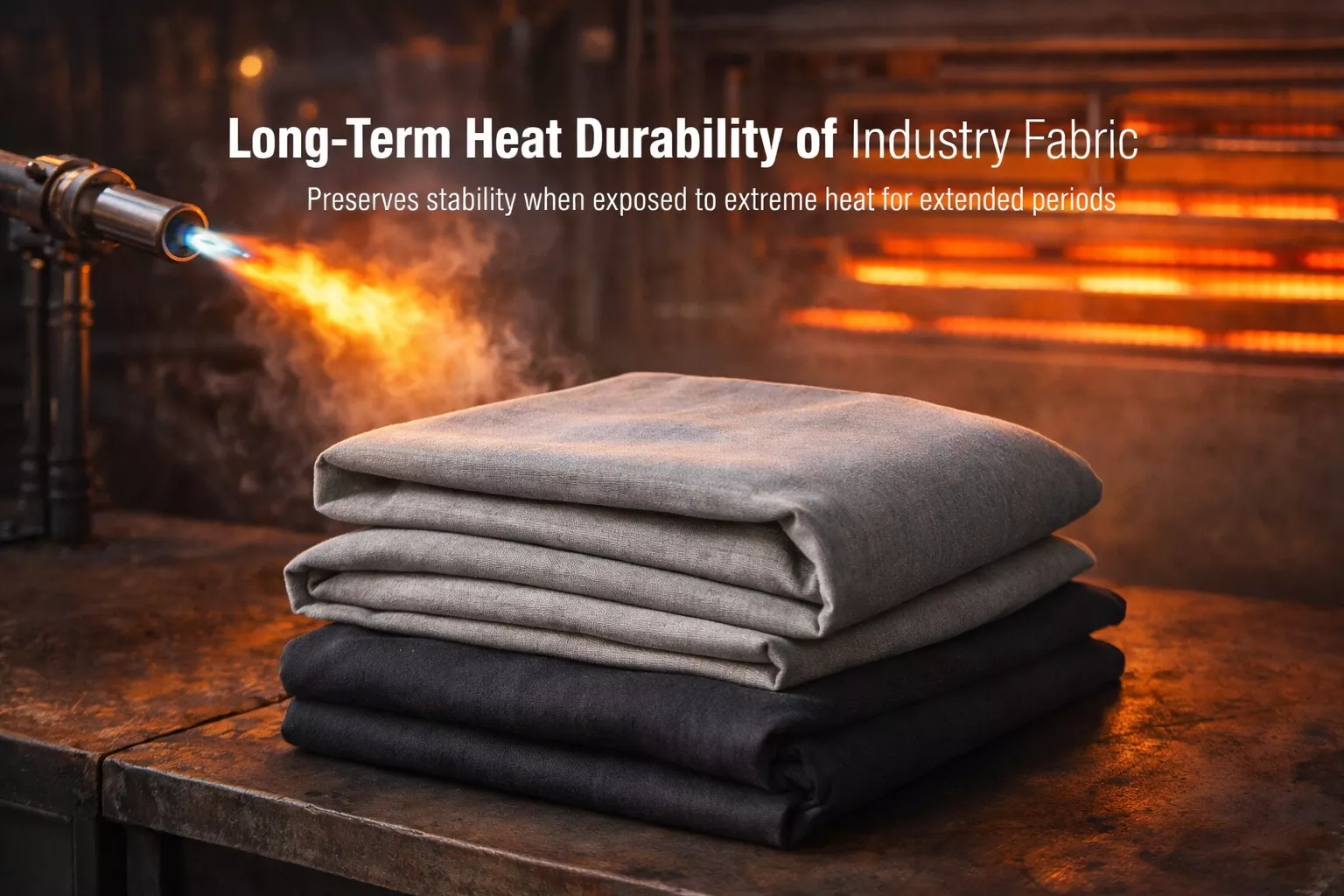
Coated technical fabrics used in industrial environments—thermal barriers, insulation jackets, expansion joints, protective curtains, and containment systems—often fail not because they cannot tolerate a short high-temperature event, but because they degrade slowly under continuous heat exposure and thermal cycling. In these applications, industrial fabric durability testing is essential for long-term material validation.
Many datasheets quote “maximum temperature” or “peak temperature” limits, but real industrial service depends on:
-
continuous operating temperature
-
exposure time at temperature
-
thermal cycling frequency
-
presence of steam/chemicals / mechanical flex
-
adhesion retention between coating and substrate
Without a clear thermal ageing protocol, engineers and buyers risk selecting materials that appear acceptable on paper but suffer early field failures such as coating hardening, cracking, blistering, or delamination. In engineered coated textile systems, internal references such as Textrov, Craigetech, and Vinylcoat may also be relevant depending on the service requirement.
Thermal ageing protocols provide a structured way to evaluate:
-
coating integrity over time
-
flexibility retention
-
adhesion stability
-
onset of embrittlement
-
changes in permeability and barrier performance
A consistent thermal ageing method allows reliable comparison across coated fabrics and helps calibrate material selection to real operating envelopes, especially in thermal ageing coated fabrics and broader high temperature textile testing programs.
Mechanism Explanation
Thermal ageing in coated fabrics is driven by gradual chemical and physical changes in polymer coatings and at the coating–substrate interface. This is a central concern in industrial fabric durability testing.
Polymer Degradation Under Heat
At elevated temperatures, coatings can undergo:
-
oxidation
-
chain scission
-
crosslink changes (hardening or softening)
These mechanisms reduce flexibility and can increase brittleness. In advanced coated fabric systems, Silicoat and Elastcoat may also be relevant internal references depending on coating chemistry.
Interface Fatigue
Even if the coating remains chemically stable, repeated thermal cycling causes:
-
expansion mismatch between coating and textile substrate
-
micro-crack initiation at interface
-
progressive reduction in peel/adhesion strength
Property Drift (Not Just Failure)
Thermal ageing often produces slow changes before visible failure:
-
increased stiffness
-
reduced elongation
-
reduced adhesion
-
increased permeability
-
reduced abrasion resistance
Proper protocols aim to detect these shifts early—before catastrophic failure. This is why high temperature textile testing must focus on property retention, not only visible damage.
Engineering Comparison Table: Exposure Profiles and What They Reveal

A robust ageing protocol uses at least two exposure profiles, not only continuous heat. This is especially important when evaluating thermal ageing coated fabrics.
Failure Mode Analysis (What You Measure and What It Means)
A. Coating Hardening / Embrittlement
Symptoms:
-
increased stiffness
-
micro-cracks on bending
Meaning:
Polymer ageing has reduced flexibility → failure risk rises in dynamic applications.
B. Adhesion Loss / Delamination
Symptoms:
-
peeling at edges
-
interface separation after flexing
Meaning:
Thermal mismatch + interface degradation → laminate integrity failing.
C. Blistering
Symptoms:
-
bubbles under coating after exposure
Meaning:
Moisture diffusion + vapor pressure; barrier system inadequate.
D. Surface Cracking
Symptoms:
-
visible cracks, especially at fold lines
Meaning:
Coating has lost elongation; stress concentration triggers crack growth.
These failure modes should be tracked systematically with repeatable tests, not subjective observation. This is a key principle in industrial fabric durability testing.
Thermal Ageing Protocol Framework (Practical)
Below is a practical protocol structure that is realistic for industrial R&D / QA labs.
Step 1 — Define Service Envelope
Capture:
-
continuous operating temperature (°C)
-
peak events (°C and duration)
-
cycling frequency (cycles/day or week)
-
presence of steam/humidity
-
chemical vapours (acid/alkali/oil/solvent)
-
mechanical movement (flexing, vibration)
Step 2 — Select Exposure Profiles
Minimum recommended:
-
Continuous heat ageing
-
Thermal cycling ageing
Optional based on use case:
-
Heat + humidity / steam exposure
-
Intermittent spike exposure
Step 3 — Define Ageing Durations (Accelerated)
Common intervals:
-
24 h
-
72 h
-
168 h (1 week)
-
500 h
-
1000 h
Use multiple checkpoints instead of “one final test”.
Step 4 — Test at Each Checkpoint
Track key properties (see Section 6). In application-specific systems, Fluorocoat and Texflex may also serve as useful internal references where long-term coating performance matters.
Testing Methods (What To Measure After Ageing)
The protocol is only useful if you measure the right performance indicators. This is the foundation of high temperature textile testing.
Core Mechanical Tests
-
tensile / tear (if relevant)
-
flex endurance (bend cycles to crack)
-
stiffness change (qualitative + quantitative)
Adhesion Tests
-
peel strength retention (before vs after ageing)
-
adhesion failure mode identification:
-
cohesive (within coating) vs adhesive (interface failure)
Barrier / Surface Tests
-
permeability changes (air or vapor, depending on product)
-
surface wetting / contact angle (if repellency is key)
Visual / Microscopic Inspection
-
crack initiation
-
blister formation
-
interface separation
Key output should be retention curves, not only pass/fail. In related filtration and industrial textile systems, Texfil may also be a relevant internal reference.
Engineering Design Guidelines (How to Use Ageing Results)
-
Use retention curves for selection, not single-point values.
A material with 95% retention at 168 h but steep drop by 500 h is risky for long-life applications. -
Match ageing profile to application reality.
Thermal cycling can break laminates even when continuous heat ageing looks good. -
Watch adhesion retention closely.
Most field failures in coated composites occur at interfaces, not within the fiberglass substrate. -
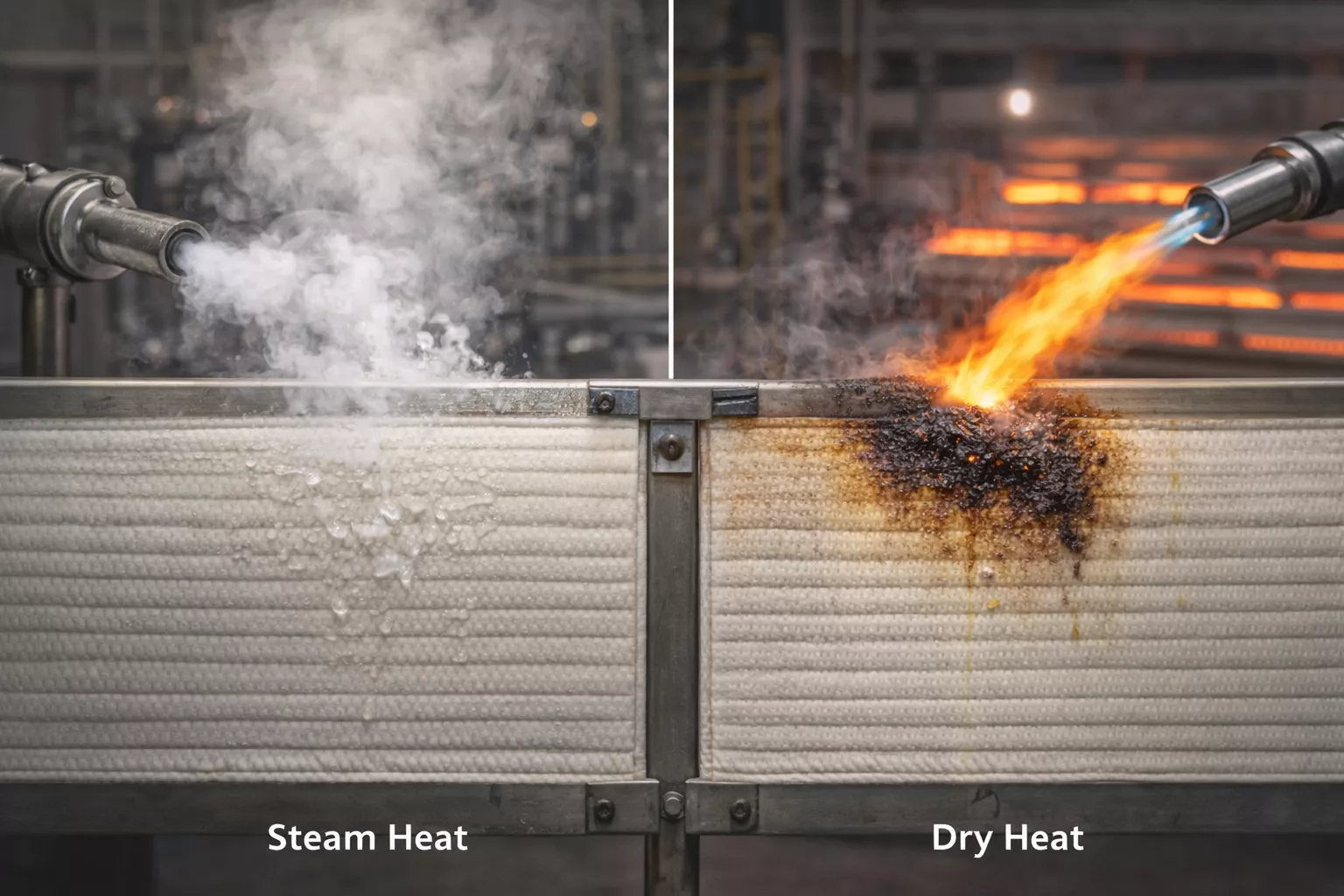
Include moisture/steam ageing when relevant.
Steam can destroy adhesion faster than dry heat.
These principles improve interpretation of results in both thermal ageing coated fabrics and broader industrial fabric durability testing.
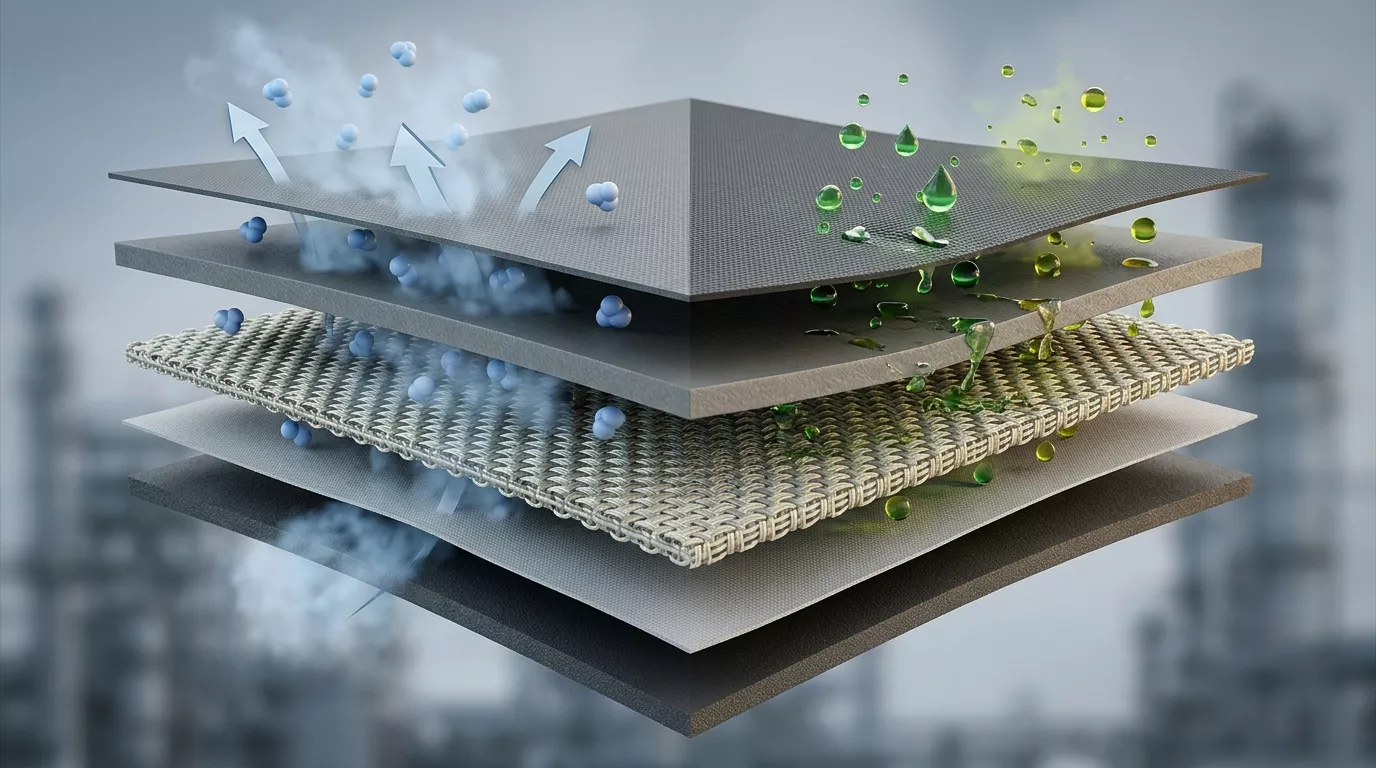
Typical Test Stack (Coated Fabric Architecture)
Coated fabrics tested under thermal ageing usually have a layered structure:
Protective surface layer
↓
Functional coating layer
↓
Reinforced glass / technical textile substrate
↓
Optional barrier layer
↓
Structural support layer
Thermal ageing must consider both:
-
coating chemistry stability
-
interface adhesion stability
Closing Insight
Thermal ageing protocols are essential for selecting coated technical fabrics for real industrial environments. The difference between a fabric that survives a short high-temperature event and one that remains stable for long service life lies in retention of flexibility, adhesion, and barrier performance under realistic exposure profiles. A structured ageing protocol—combining continuous heat and thermal cycling with targeted property measurements—turns material selection from assumption into engineering control. This is why thermal ageing coated fabrics, high temperature textile testing, and industrial fabric durability testing remain critical for reliable industrial material qualification.